


MAY TEA trademarks: Conceptual similarity between signs does not automatically lead to a likelihood of confusion in the minds of consumers
On January 20, 2026, Schweppes International Limited (SIL), represented by BCTG Avocats, won a decisive victory for the MAY TEA trademarks challenged by a Russian company “MAY” that owned several earlier trademarks, in Cyrillic characters, “МАЙСКИЙ ЧАЙ”.
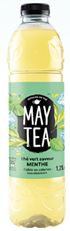
After a procedural marathon lasting more than five years, involving successively the EUIPO Cancellation Division, the EUIPO First Board of Appeal, the General Court of the European Union, the Court of Justice of the European Union and, after referral, the Second Board of Appeal of the EUIPO, the four MAY TEA trademarks of Schweppes International Limited have been definitively upheld for registration.
In this case, the Russian company “MAY,” owner of several earlier trademarks in Cyrillic characters “МАЙСКИЙ ЧАЙ” (meaning “May tea” in Russian) and figurative trademarks containing this verbal element, registered and used for tea, had filed applications for invalidity in November 2020 against four EU MAY TEA trademarks owned by SIL, registered for tea-based beverages in classes 30 and 32.
The Russian company “MAY” argued that there was a likelihood of confusion between the trademarks, particularly for the part of the European public able to read the Cyrillic alphabet and with a basic knowledge of Russian and English.
The four decisions of the Second Board of Appeal of January 20, 2026 essentially confirm that finding conceptual identity between the signs does not automatically lead to a finding of likelihood of confusion in the minds of consumers.
In the context of the necessary overall assessment of the signs, the Board of Appeal, following the General Court of the European Union, concluded that there was no likelihood of confusion. Indeed:
- The signs are visually dissimilar. Although the word elements “MAY TEA” and “МАЙСКИЙ ЧАЙ” share some letters, their structure and length are broadly different. In addition, the contested trademarks include figurative elements that are absent from the earlier word trademark.
- Phonetically, the signs are very dissimilar. The pronunciations, one English (“mei-tii”) and the other Russian (“mai-ski-tchai”), are clearly different due to the use of different alphabets.
- Conceptually, the signs are identical or very similar for the bilingual public (Russian/English). However, the Board of Appeal considered that the impact of this similarity is low because it is based on a term that is not very distinctive (“tea”).
In its overall assessment of the likelihood of confusion, the Second Board of Appeal emphasized that the visual aspect is paramount when purchasing everyday consumer products in self-service stores. Therefore, despite the similarity of the products, the significant visual and phonetic differences between the trademarks are sufficient to rule out any likelihood of confusion, even if the trademarks are conceptually identical for part of the public.
EUIPO, Second Board of Appeal, January 20, 2026, R-72 2022-2, R-73 2022-2, R-75 2022-2, R-77 2022-2
Online infringement: Meta may be subject to filtering measures as an intermediary
By an important decision issued on January 28th, 2026, the Paris Court of Appeal confirmed that Meta may be ordered to implement automated filtering measures to prevent the dissemination of infringing advertisements for online casino, pursuant to Article L.716-4-6 of the French Intellectual Property Code. This provision allows any person with standing to bring an infringement action to apply to the competent civil court for an order—where appropriate, subject to a penalty payment—against the alleged infringer or the intermediaries whose services are used, for any measure intended either to prevent an imminent infringement or to bring an end to acts alleged to constitute infringement.
In this case, between November 2023 and January 2024, the Barrière Group noticed that several thousand advertisements were being distributed on Facebook, Instagram and Messenger without authorisation, using its trademarks to promote an online casino application, an activity that is illegal and punishable in France. After several reports to Meta and a cease and desist letter, Barrière obtained, by order on request dated January 11th, 2024, on the basis of Article L.716-4-6 of the aforementioned Intellectual Property Code, that filtering measures intended to prevent the dissemination of new disputed advertisements be ordered to Meta, then qualified as an intermediary. Meta then sought to have this order withdrawn, arguing in particular that there was no urgency justifying a departure from the adversarial principle and that the alleged harm could be remedied by the award of damages.
In this decision, the Paris Court of Appeal rejected Meta’s arguments. It pointed out that the urgency of the situation, characterised by a massive fraud campaign and the persistence of illegal content despite reports, justified a non-adversarial procedure in order to avoid irreparable harm. The Court also emphasised that Meta’s internal trademark protection tool did not allow for pre-publication checks, exposing Barrière and consumers to the risk of further massive fraud.
In addition, the key aspect of this decision lies in the fact that the Court ruled that Meta must be classified as an intermediary within the meaning of Article L.716-4-6 of the Intellectual Property Code. This classification is decisive because it allowed filtering measures to be ordered, whereas the usual status of host, which does not imply a priori control of content, would normally have protected it from such an injunction. The Court found that Meta’s services were used by third parties to infringe the intellectual property rights of the Barrière company, without it being necessary to determine its active or passive role.
Meta argued primarily that the filtering injunction imposed a general monitoring obligation on it that was prohibited by the e-commerce directive and the Digital Services Act (DSA). The Court rejected this argument, ruling that gambling activities are excluded from the scope of the e-commerce directive and that this exclusion extends to advertisements for such games.
Finally, the Court confirmed the proportionality of the injunction, which was strictly limited in its purpose, duration (12 months) and territorial scope. It noted that the measure, implemented by Meta’s automated tools, had led to a significant reduction in the content in question, without the company demonstrating that it imposed an “unbearable sacrifice” on it.
By endorsing the use of “dynamic filtering injunctions”, this decision is fully in line with the approach set out in Recommendation (EU) 2024/915 of March 19th, 2024, on the fight against infringement. The recognition of platform operators as intermediaries under the French Intellectual Property Code opens the door to robust preventive measures grounded in IP law, which are not subject to the limited liability regime applicable to hosting providers.
Paris Court of Appeal, January 28th 2026, No. RG 24/12568
Advertising for alcoholic beverages. “Levrette” decision: the Court of Cassation excludes packaging from the scope of the Evin Law
In a decision dated January 20, 2026, the Criminal Division of the Court of Cassation partially overturned the Paris Court of Appeal’s decision of May 15, 2024, which had convicted BEER MARKET of illegal advertising for “Levrette” beer.
In the first instance, the Paris Judicial Court had found the company guilty of illegal advertising under the Evin Law for various slogans, visuals, fictional worlds, characters, and the absence of health warnings. The Court of Appeal upheld and even extended the conviction to include the use of the name “Levrette” on the bottles themselves and on the website, ruling that packaging used for advertising purposes must comply with Article L. 3323-4 of the French Public Health Code.
The decision extended the logic applied in the “Carlsberg” case in 2016, where the Paris Court of Appeal had considered that the packaging of beverages depicting soccer players constituted propaganda in favor of an alcoholic beverage.
BEER MARKET appealed to the Court of Cassation, focusing on two specific grounds: the inapplicability of Article L. 3323-4 of the Public Health Code to the packaging itself (i) and the lawfulness of using the name “Levrette” in advertising as the trade name of the product (ii).
In its decision of January 20, 2026, the Court of Cassation reversed its previous case law by censuring the appeal deision on these points. The Court of Cassation held that Article L. 3323-4 of the Public Health Code, which exhaustively lists the content of advertising authorized for alcoholic beverages, does not apply to the packaging of such beverages. The Court thus considered that the name “Levrette” was not unlawful in this case, since it was used in advertising as the commercial name of the product.
“It follows from the third paragraph of this text that the packaging of an alcoholic beverage may only be reproduced in advertising if it complies with the provisions of the first paragraph, which exhaustively lists the statements authorized in advertising for these beverages. It follows that the packaging itself is not subject to the requirements of the first paragraph.”
This decision is particularly important for producers of alcoholic beverages as it clarifies the scope of the aforementioned article, which does not apply to the packaging of alcoholic beverages as such, which cannot be considered an advertising medium in itself.
The Court also overturned the appeal decision insofar as it had found the company guilty of illegal advertising for using the term “Levrette” on its website.
In 2024, the Paris Court of Appeal considered that the choice of the name “Levrette” was intended to associate beer consumption with sexuality, in particular through puns designed to appeal to a young audience, and that neither the slogans nor the fictional universe of the brand were related to the indications exhaustively provided for in Article L. 3323-4 of the Public Health Code.
Conversely, for the Court of Cassation, the term “Levrette” is, in this case, a reference authorized by the Evin Law since it is the trade name, registered as a trademark, under which the beverages are sold. The beer bottle under its trade name “Levrette” may therefore be reproduced on the website without violating the provisions of the Evin Law.
Court of Cassation, Criminal Chamber, January 20, 2026, No. 24-83.474
Adoption of the bill on the confidentiality of legal advices with corporate lawyers
On January 14, 2026, Parliament definitively adopted the bill on the confidentiality of legal advices with corporate lawyers, establishing the emergence of a French-style “legal privilege.”
The law thus adopted puts an end to a long-standing debate, which has been ongoing for several decades, on the lack of protection for internal legal advices, often perceived as a competitive disadvantage for French companies. It marks a significant development in French law, bringing the status of in-house lawyers closer to that of their Anglo-Saxon and European counterparts.
In terms of legislation, the measure amends Law No. 71-1130 of December 31, 1971, by inserting a new Article 58-1, which enshrines the principle of confidentiality of internal legal advices subject to five cumulative conditions.
Legal advices are therefore covered by confidentiality:
- (1) constituting a personalized intellectual service, aimed at providing an opinion or advice based on the application of a rule of law;
- (2) drafted by a corporate lawyer, or under his or her supervision, provided that the lawyer holds a master’s degree in law or an equivalent qualification;
- (3) drafted by a lawyer who has undergone specific training in ethical rules, the reference framework for which will be defined by order on the proposal of a commission whose composition will be determined by decree, and who works within a legal department;
- (4) intended exclusively for the management, administrative, or supervisory bodies of the company or its group;
- (5) bearing the words “confidential – legal consultation – corporate lawyer,” with identification of the author and separate filing in the company’s records.
Legal advices meeting these conditions benefit from extended procedural protection in civil, commercial, or administrative proceedings. They may not therefore be seized or required to be handed over to a third party, including a French or foreign administrative authority, nor may they be used against the company employing the lawyer or the companies in its group.
However, this confidentiality is not enforceable in criminal or tax proceedings, nor against European Union authorities when they exercise their supervisory powers, in accordance with the established case law of the Court of Justice of the European Union.
The text also establishes a specific procedural mechanism in the event of a dispute over confidentiality during investigative measures or administrative visits. The disputed documents are then placed under seal pending a decision by the judge, who may, if necessary, order their release.
While this new regime has been welcomed by the French Association of Corporate Lawyers (AFJE) and some economic actors, it has nevertheless raised some reservations. On January 23, 2026, sixty members of parliament referred the matter to the Constitutional Council, challenging in particular the relationship between the mechanism and the investigative powers of independent administrative authorities.
The petitioners point out in particular that the law is vague about the situations in which French economic and financial regulators apply EU law standards. The text excludes confidentiality with regard to EU authorities but does not specify the rules that apply when national authorities, such as the Financial Markets Authority or the Competition Authority, take action on this basis. This ambiguity could lead to inconsistent situations, where access to documents would vary depending on the legal framework of the investigation, without the law clearly settling the question of the enforceability of confidentiality in such cases.
Pending the decision of the Constitutional Council, the text cannot be promulgated. Its entry into force remains subject to the adoption of a decree by the Council of State specifying its terms of application, no later than the first day of the twelfth month following its promulgation.
Therapeutic combinations: red light for CCP based on a simple extension of marketing authorization
Genmab A/S holds EP patent 2 081 595 for an anticancer treatment and markets the drug Darzalex. In 2016, an initial marketing authorization (centralized MA No. [EU]/1/16/1101) was granted for this drug, used alone. In 2017, following clinical trials, Genmab applied for a type II variation to the MA under European Regulation 1234/2008. A modified MA was then granted (Decision C (2017) 2958, April 28, 2017) to extend the indications to combination regimens, in particular with bortezomib and dexamethasone. Patent EP 2 081 595 protects the combination of the active ingredients daratumumab, bortezomib, and dexamethasone. On October 9, 2019, Genmab applied for a supplementary protection certificate (SPC No. 19C1056) for “daratumumab in combination with bortezomib in combination with dexamethasone,” basing its application on the 2017 variation, which it considered to be the first marketing authorization for the “product” within the meaning of Regulation (EC) No. 469/2009.
By decision of November 8, 2023, the Director General of the INPI rejected the SPC application, considering that the condition of Article 3(b) of Regulation No. 469/2009 had not been satisfied, as there was no MA covering the combination claimed as a medicinal product. Genmab lodged an appeal with the Paris Court of Appeal. It primarily sought the annulment of the decision, arguing that the type II variation constituted a marketing authorization authorizing the “loose” combination of the three active ingredients for the first time. In the alternative, it requested a preliminary ruling from the CJEU on two questions relating, on the one hand, to the classification of a “loose” combination as a “product” and, on the other hand, to the classification of a type II variation authorizing a new therapeutic combination as a “marketing authorization” within the meaning of Article 3(b). The INPI concluded that the appeal should be dismissed, on the grounds that there was no “first marketing authorization” covering the combination as a medicinal product and on the grounds that the preliminary questions were not serious.
The Paris Court of Appeal dismissed Genmab’s appeal, upheld the INPI’s decision, and ruled that there was no need for a preliminary ruling by the CJEU.
The Court first referred to Regulation No. 469/2009: (i) the “product” is the active ingredient or the composition of active ingredients (Art. 1(b)); (ii) the supplementary protection certificate requires that “as a medicinal product,” the product has obtained a valid marketing authorization (Art. 3(b)) and that this marketing authorization is the first for the product (Art. 3(d)); (iii) SPC protection is strictly limited to the product covered by the MA (recital 10; Art. 4). “Consequently, in order to qualify for a supplementary protection certificate, the product, understood within the meaning of the regulation as an active ingredient or a combination of active ingredients, must be placed on the market as a medicinal product, in the form of one or more pharmaceutical specialties, under a marketing authorization that must cover the active ingredient, or all of the active ingredients forming the combination as a medicinal product”.
Applying this framework, the Court finds that the initial marketing authorization of 2016 concerns only daratumumab, and that Decision C (2017)2958 is a type II variation relating to new therapeutic indications and combination regimens, without changing the purpose of the authorized medicinal product or the “product” covered by the marketing authorization, which remains daratumumab alone. In this regard, the SPC and the package leaflet confirm that Darzalex contains only daratumumab as the active substance; references to clinical combinations relate to the use of the medicinal product and do not confer on the combination of daratumumab/bortezomib/dexamethasone the status of a “product” authorized as a medicinal product. The Court then refers to the case law of the CJEU (Santen, July 9, 2020, C-673/18; Abraxis, March 21, 2019, C-443/17) to recall that the “first marketing authorization” refers to the first time the active ingredient or combination was placed on the market as a drug, regardless of the scope of the basic patent and without taking into account new therapeutic applications.
Therefore, the 2016 marketing authorization for daratumumab as a monotherapy cannot be “converted” by a type II variation into a marketing authorization for a new combination of active ingredients. The condition of Article 3(b) is not satisfied, and, in any event, Article 3(d) precludes the 2017 variation from being considered the first marketing authorization for the claimed “product.”
The request for a preliminary ruling is dismissed as unnecessary: the distinction between “loose” and “fixed” combinations is irrelevant to the reasoning, and the interpretation of Articles 3(b) and 3(d), as resulting from the Santen judgment, leaves no room for reasonable doubt.
The judgment clearly confirms that it is impossible to base a SPC for a combination of active ingredients on a simple type II variation of an MA initially granted for a single-component medicinal product. It specifies that the extension of therapeutic indications to combination regimens does not constitute authorization of the “product” composed of the combination of active ingredients.
Court of Appeal of Paris, October 24, 2025, RG No. 24/03614

See also...
Newsletter employment law – july 2026
Published on 24 July 2026 at 16h20
IP STARS: The Intellectual Property Team Recognized in 2026
Published on 01 July 2026 at 13h35
Newsletter Intellectual property – june 2026
Published on 25 June 2026 at 12h56